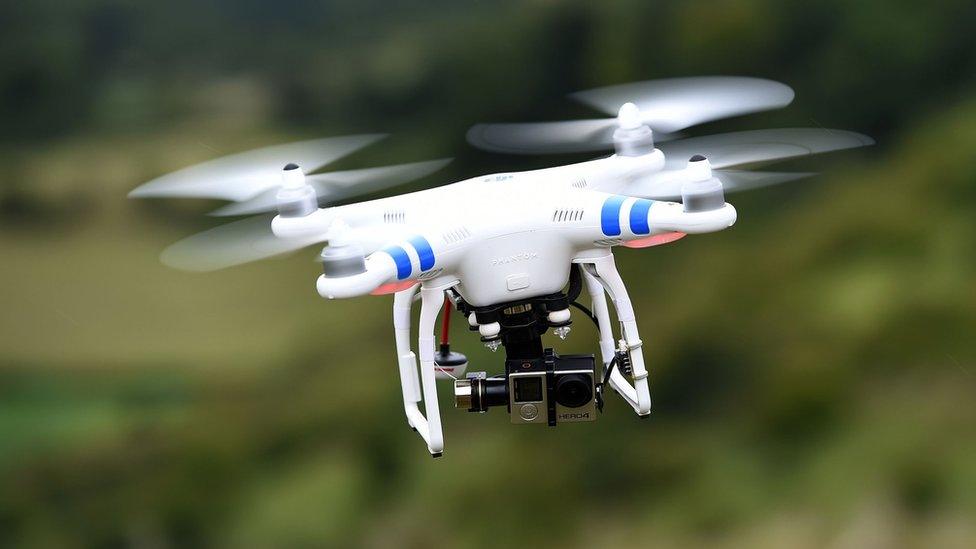
The drone industry in Uganda is growing fast. Here's why getting your Remote Pilot Authorization in 2025 isn't just about compliance — it's about getting ahead of the curve before the market gets crowded.
A few years ago, flying a drone commercially in Uganda was a grey area. Operators flew, clients hired them, and the regulatory framework was still catching up. That era is over.
The Uganda Civil Aviation Authority (UCAA) now requires any commercial drone operator to hold a valid Remote Pilot Authorization (RPA) before flying for hire. That means photographers, surveyors, agricultural service providers, security firms, and any business deploying UAVs professionally must have certified operators on their payroll — or risk grounding their operations entirely.
At FlyQuest Drone Centre, we've watched this shift happen in real time. And what we're seeing now is a market that's moving faster than the training supply can keep up with.
The Opportunity Window Is Open — But Not Forever
Right now, demand for certified drone pilots in Uganda outstrips supply. That's the simple reality. Construction companies running large-scale infrastructure projects need aerial survey operators. Agribusinesses are investing in precision spraying to compete regionally. Security firms are adding UAV capability to their service offerings. And government agencies — from urban planning departments to disaster response units — are building in-house drone capability.
If you get certified today, you are entering a market where your skills are scarce and your value is high. That window won't stay open indefinitely. Within three to five years, the market will normalize as more trained operators enter the field. The pilots who built their track records early — with real certifications, real flight hours, and real client engagements — will be the ones commanding the best rates and the most trusted contracts.
What the RPA Certification Actually Gets You
The Remote Pilot Authorization isn't just a piece of paper. Here's what holding a UCAA-recognized certification actually means in practice:
Legal protection. You can fly commercially without risking regulatory action, equipment seizure, or liability exposure to your clients. This matters more than people realize — particularly for corporate clients and government contracts, which now routinely require proof of certification before engaging any drone operator.
Client credibility. When you present yourself as a certified FlyQuest graduate with a UCAA-recognized RPA, you immediately separate yourself from the hobbyist operators who flood every market. Enterprise clients — mining companies, NGOs, construction firms — will not shortlist uncertified operators for serious projects.
Insurance eligibility. Most professional liability and equipment insurance policies for UAV operators require proof of certification. Without it, you're flying exposed.
Pathway to advanced specialization. The RPA is the foundation. Once you hold it, you can layer specialized skills on top — aerial survey, agricultural applications, thermal inspection — each of which commands a premium in the market.
What Training at FlyQuest Actually Looks Like
We designed our RPA program around a simple principle: you should be able to walk out of here and take on a paying client within your first week of graduation.
That means the curriculum is weighted toward practical, in-the-field application — not just classroom theory. You'll spend time on:
Airspace regulations and how to navigate controlled versus uncontrolled airspace in Uganda
Pre-flight risk assessment using industry-standard checklists
Manual flight operations across a range of conditions and environments
Emergency procedures — what to do when something goes wrong mid-flight
Post-flight documentation and client reporting standards
By the time you complete your final practical assessment, you've accumulated real flight hours, handled real scenarios, and produced the kind of documentation that professional clients expect.
Who Is This For?
We train a wide range of people at FlyQuest. Some common profiles we see:
The career changer who's looking for a technical skill with clear commercial applications. Drone operations sit at the intersection of aviation, technology, and data — which makes it appealing to engineers, surveyors, agronomists, and IT professionals looking to pivot.
The entrepreneur who already has clients in agriculture, construction, or real estate and wants to offer aerial services in-house rather than subcontracting. Getting certified means owning the revenue stream instead of splitting it.
The recent graduate entering the job market who wants a differentiated credential. A UCAA-recognized RPA on your CV tells employers you're ahead of your peers and serious about your field.
The corporate team whose employer has invested in drone hardware but needs certified operators to fly it legally and effectively. FlyQuest runs group training and on-site corporate programs for exactly this use case.
A Note on the Junior Program
If you're reading this as a parent or educator — FlyQuest's Junior Drone Program is worth knowing about. It's designed for young people aged 14 to 21 and introduces drone science, safe flight practices, and the career pathways that aviation and UAV technology open up. In a region where STEM skills are increasingly tied to economic opportunity, giving a young person early exposure to this industry is a genuine investment in their future.
The Cost of Not Getting Certified
There's a version of this story where you skip the certification, buy a drone, and try to get clients on the strength of good footage or word of mouth. That approach works until it doesn't — and in Uganda's tightening regulatory environment, it's getting harder every year.
The UCAA is not relaxing its standards. Corporate clients are not getting more flexible about compliance requirements. And the operators who build track records early — with documentation, certifications, and verifiable training — will be the ones the market rewards as the industry matures.
The cost of RPA certification at FlyQuest is UGX 4,000,000. That's the cost of entry into a profession where a single commercial aerial survey contract can recover that investment in full. The question isn't whether you can afford to get certified. It's whether you can afford not to.
Ready to Start?
If you're considering drone training, the right time to begin is before the market catches up with the opportunity. Talk to our team, ask your questions, and let's figure out which program fits your goals.
You can reach us at info@flyquestdronecentre.com, call or WhatsApp +256 788 912 553, or fill in the contact form on our website. We respond within 24 hours